


The Art and Science of Drying Cannabis for Optimal Quality

Drying cannabis is a crucial step that directly affects the final quality, potency, and flavor of the product. Whether you are a home grower or a commercial cultivator, understanding how to properly dry cannabis can make the difference between a harsh, low-quality smoke and a smooth, aromatic experience. This post explores the essential techniques and science behind drying cannabis to help you achieve the best results.
Why Drying Cannabis Matters
Freshly harvested cannabis contains a high moisture content, which makes it susceptible to mold and degradation. Drying removes excess water slowly and evenly, preserving the cannabinoids like tetrahydrocannabinol (THC) and cannabidiol (CBD), as well as the delicate terpenes responsible for aroma and flavor. Improper drying can lead to:
Harsh smoke or vapor
Loss of potency
Mold growth
Unpleasant taste
The goal is to reduce moisture to a safe level while maintaining the chemical profile and texture of the flower.
Ideal Conditions for Drying Cannabis
Creating the right environment is key to drying cannabis effectively. The main factors to control are temperature, humidity, and airflow.
Temperature: Keep the drying area between 60°F and 70°F (15°C to 21°C). Higher temperatures can degrade cannabinoids and terpenes.
Humidity: Aim for 45% to 55% relative humidity. Too high humidity encourages mold; too low causes the buds to dry too fast and become brittle.
Airflow: Gentle, consistent airflow prevents mold but avoid direct wind on the buds, which can dry them unevenly.
Using a dedicated drying room or tent with a hygrometer and thermometer helps maintain these conditions. Some growers use fans and dehumidifiers to fine-tune the environment.
Methods of Drying Cannabis
Several methods exist, each with pros and cons. The most common are:
Hanging Whole Branches
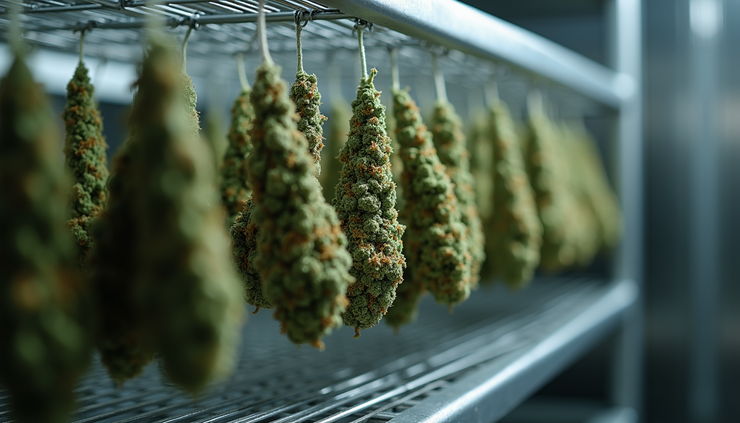
This traditional method involves cutting whole branches and hanging them upside down on racks or lines. It allows slow, even drying and preserves the structure of the buds.
Advantages: Minimal handling, better preservation of trichomes.
Disadvantages: Requires space and controlled environment.
Drying Individual Buds
After trimming, buds are spread on drying screens or trays.
Advantages: Saves space, easier to manage small batches.
Disadvantages: More handling can damage trichomes, risk of uneven drying.
Using Drying Machines
Commercial growers may use forced-air drying machines that control temperature and humidity precisely.
Advantages: Faster drying, consistent results.
Disadvantages: Expensive equipment, risk of drying too fast if not monitored.
How to Tell When Cannabis Is Properly Dried
Knowing when cannabis is dry enough is essential to avoid over- or under-drying. Here are some practical indicators:
Stem snap test: Bend a small stem; it should snap cleanly rather than bend.
Bud texture: The buds should feel dry on the outside but slightly spongy inside.
Weight: Properly dried buds lose about 75-80% of their fresh weight.
Drying typically takes 7 to 14 days depending on conditions and bud size.

The Importance of Curing After Drying
Drying is only the first step. After drying, cannabis should be cured to improve flavor, smoothness, and potency. Curing involves storing dried buds in airtight containers, opening them periodically to release moisture and allow fresh air exchange.
Duration: Usually 2 to 8 weeks.
Benefits: Breaks down chlorophyll, enhances terpene profiles, reduces harshness.
Skipping curing can result in a less enjoyable product even if drying was done correctly.
Common Mistakes to Avoid
Drying too fast: High heat or low humidity can cause buds to dry unevenly and lose aroma.
Poor airflow: Stagnant air leads to mold and mildew.
Handling buds excessively: Damages trichomes and reduces potency.
Ignoring environment: Not monitoring temperature and humidity leads to inconsistent results.
Final Thoughts on Drying Cannabis
Drying cannabis is both an art and a science. It requires patience, attention to detail, and control over environmental factors. By drying slowly in the right conditions, you protect the active ingredients like THC and CBD, preserve the delicate terpenes, and ensure a smooth, flavorful experience.
If you grow cannabis, invest time in mastering drying techniques. Your final product will reward you with better quality, potency, and enjoyment.


Comments